
Society
We Declared Ourselves a Christian Nation. So Why Is a New Muslim Centre Opening in Jiwaka?
by Li Richards · August 27, 2026
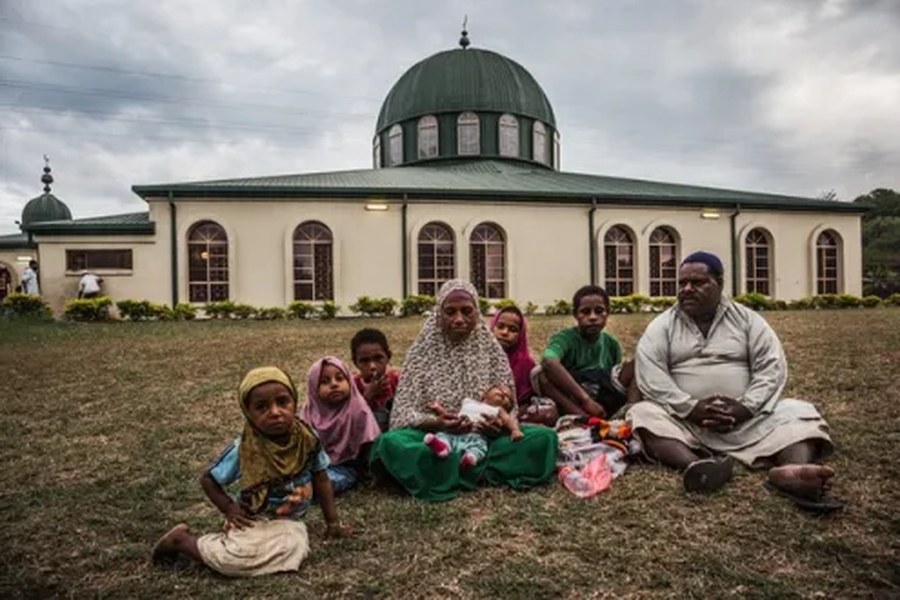
Photo source: The Muslim Times
On the 3rd of August this year, a new Muslim community centre opened in Jiwaka province, in the middle of coffee country — announced on local Facebook pages, though I couldn’t find a single mainstream PNG newsroom that covered it. That gap says something on its own. But it stopped me in my tracks, because six months earlier I’d watched our own Parliament stand up, 80 votes to 4, and declare Papua New Guinea a Christian nation before God and the world. So which is it? Are we a Christian country, or are we a country where that declaration only applies until the next building goes up?
Here’s a question for you before I go any further: if 96 percent of this country ticks “Christian” on the census, why does the other 4 percent make so many of us nervous?
Let’s get the facts straight first, because this essay isn’t going to survive on vibes. In March last year, Parliament amended our Constitution’s preamble to acknowledge “God the Father, Jesus Christ the Son, and the Holy Spirit” as the source of our authority as a nation, made the Bible a national symbol, and wrote Christian identity into the Fifth Goal of our National Goals and Directive Principles. Prime Minister James Marape, the man who pushed hardest for it, called it recognition of something that was already true — that the churches got here before the government did, and in a lot of remote parts of this country, they’re still the only functioning institution around. Eighty votes for, four against. That’s not a close call. That’s a nation speaking.
And in the same breath, Parliament kept Section 45 of the Constitution fully intact — the section that protects every citizen’s freedom to practise whatever religion they choose, or none at all. So legally, we are two things at once: a Christian nation, and a nation where anyone can build a mosque in Jiwaka and it’s nobody’s business but theirs. I don’t have a problem with the law. I have a problem pretending that law settles anything about what we actually believe as a people, or what we’re comfortable watching grow in our own backyard.
Because let’s talk about what’s actually growing. Islam in PNG isn’t some foreign import landing on our shores by boat — it’s us. The Islamic Society of Papua New Guinea was formed in 1983, and it took root fastest in exactly the provinces you’d least expect: the Southern and Western Highlands, Simbu, Oro, and Jiwaka — the same Jiwaka where that community centre just opened. Researchers who’ve done fieldwork on this describe a Muslim population that’s gone from under 500 people in 2001, to roughly 2,000 by 2012, to somewhere around 10,000 today — and the overwhelming majority of that growth is indigenous Papua New Guineans converting, not migrants moving in. And here’s the part that should actually worry church leaders more than any mosque does: researchers studying this conversion trend found that a real driver is rejection — people turning away from Christianity specifically because they associate it with colonisation, with foreign control, with a religion that arrived on someone else’s terms. That’s not me being provocative. That’s the actual finding. If that’s true, our own churches may be losing people not because Islam out-argued them, but because something about how Christianity showed up here never fully let go of the coloniser’s fingerprints.
To be fair to the record, I’ll give credit where it’s due: PNG’s own Islamic Society leadership has spent years publicly campaigning against the Highlands’ tribal warfare, sending imams into conflict zones to argue that revenge killing has nothing to do with jihad and everything to do with a cycle of violence and compensation payouts that keeps villages poor. I won’t pretend that doesn’t complicate my argument, because it does. But it doesn’t end it.
There’s a piece of this country’s own Islamic history worth sitting with honestly, because the debate itself says something about how contested the tradition is even from the inside. Sahih al-Bukhari, the most authenticated hadith collection in Sunni Islam, records Aisha stating she was six when her marriage to Muhammad was contracted and nine when it was consummated — a detail still cited today by conservative scholars defending the hadith’s authenticity. But it’s genuinely disputed: other historians, working from genealogical records and the known ages of Aisha’s siblings, argue she was in her mid-to-late teens, and that the number six was a transmission error introduced generations later. I’m not a scholar of hadith authentication and won’t pretend to settle a debate historians themselves haven’t settled — but it’s a legitimate example of how even within Islamic scholarship, the tradition argues with itself over its own founding history.
Here’s where I’ll push back on my own crowd, though — the churches and the leaders standing behind that 80-4 vote. If you actually believe this is a Christian nation, act like one has something to offer that a new religion showing up in Jiwaka can’t compete with. Don’t just legislate an identity and expect it to hold. A constitutional preamble doesn’t disciple anybody. It doesn’t answer the young man in the Highlands who’s watched Christianity get tangled up with colonial history and is looking for something that feels like it’s his to choose. If we’re losing people to conversion, the answer isn’t a louder amendment. It’s a better argument, lived out, in the villages where it actually gets tested.
A nation is allowed to have a majority faith and a genuine conversation about what else is growing inside its borders — that’s not the same as deciding a real community down the road doesn’t belong here, and I don’t think it should tip into that.
So here’s what I actually want to know, from you, whoever’s reading this: if we meant it — if 80 votes really meant something — what are we as a Christian nation prepared to actually do about it, beyond writing it into the Constitution and going back to whatever we were doing before? Do you trust Islam?