
Society
Thou Shalt Not Kill (Terms and Conditions Apply)
by Li Richards · August 26, 2026
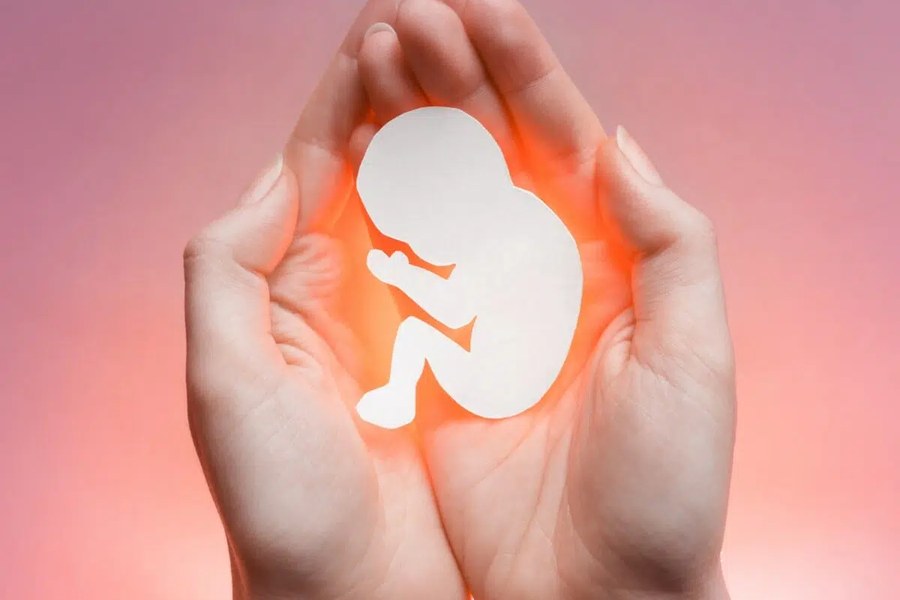
Photo source: National Today
I grew up saying the Ten Commandments the way most Papua New Guinean kids do — half memorised, half mumbled, fully terrified of what happens if you forget one during confession. Number five stuck with me the hardest: Thou shalt not kill. No footnotes. No fine print. No “unless it’s inconvenient.” Just five words, flat and final, sitting in the same list as “honour your father and mother” and “don’t covet your neighbour’s pig.”
So here’s a question for you before we go any further: do you actually believe killing is wrong, or do you believe killing is wrong depending on who’s doing the dying?
Because I’ve been watching the modern liberal left for a while now, and I have to say — nobody protests death quite like they do. Vietnam. Iraq. Afghanistan. Every march, every sit-in, every hand-painted sign with “No Blood for Oil” scrawled across it in someone’s dorm room. Guns? Same energy. Every mass shooting in America gets the same script — vigils, marches, “not one more,” calls to ban the weapons before the bodies are even in the ground. And now it’s the planet’s turn. Climate marches, school walkouts, “you are killing our future” chants aimed at anyone over fifty with a coal mine. The common thread through fifty years of protest placards is simple: killing — of people, of soldiers, of the earth itself — is wrong, and somebody needs to answer for it.
And to be fair to them — I agree. I’m not being sarcastic. War kills people who didn’t choose it. Guns end lives that had more living left to do. Wrecking the planet is a slow-motion murder of everyone who comes after us. Killing, in all those forms, is wrong. I’ll march next to you on any of it.
But here’s where the wheels fall off the wagon for me, and I genuinely don’t understand how nobody else seems to notice it screeching: the same crowd that will block a highway over a war eight thousand kilometres away, the same crowd that wants every rifle in America melted down into park benches, the same crowd currently glueing themselves to motorways over carbon emissions — turns around and calls abortion a “right.”
Why does the human being with the least power in the entire equation — the one who can’t march, can’t vote, can’t even hold its own head up — get left off the guest list of “lives that matter”?
I don’t get it. I’ve turned it over so many times I’ve given myself a headache. If you are against killing, shouldn’t that be the whole sentence? Not “I’m against killing, except this one category of human being, in this one location, at this one stage of development.” That’s not a moral position. That’s a moral position with an escape hatch built into it.
Let’s talk about where that human being actually starts, because this is where a lot of the argument quietly gets fudged. The Catholic Church doesn’t hedge on it. The Catechism is blunt: human life must be respected and protected absolutely from the moment of conception, and from that first moment, the human being carries the rights of a person — full stop, no asterisk. Mum and Dad do what mums and dads do, sperm meets egg, and what results isn’t a “maybe person” or a “potential person waiting for a permission slip.” According to that teaching, it’s a person. Complete genetic code, complete identity, complete dignity. The Church has held that line since the first century — this isn’t some 1980s culture-war invention, whatever anyone tells you.
And American law, of all things, quietly agrees more than people want to admit. In 2004, after Laci Peterson — eight months pregnant — was murdered along with her unborn son Conner, the United States passed the Unborn Victims of Violence Act. Under that law, and under similar fetal homicide statutes now on the books in the vast majority of American states, killing a pregnant woman isn’t one crime. It’s two. Two victims, two charges, two lives the law says were lost. Prosecutors have used it exactly the way it was written to be used — charging killers with taking two lives, not one plus a “pregnancy.”
So sit with that for a second. Punch a pregnant woman in a parking lot in a way that kills the child inside her, and the state of California — a state that will also happily fund an abortion clinic three blocks away — will charge you with double homicide. Same child. Same stage of development. Same womb. In one building it’s a homicide victim with a name added to the file. In the other, it’s a “choice.” Somebody explain to me how both of those things are true at the same time, because I’ve tried and I can’t make it add up.
Which brings us to the argument that’s supposed to close the whole debate: “my body, my choice.” I understand the appeal of it — it sounds clean, it sounds final, it sounds like something you’d see on a T-shirt. But it only works if the thing growing inside that body actually is that body. And it isn’t. Different heartbeat. Different blood type, sometimes. Different DNA, always. That’s not a spare organ. That’s a second person, temporarily and totally dependent on the first one — which, incidentally, describes every single one of us for the first nine months of our existence, and arguably several years after that if you ask my mother.
Let me put it another way, because I think the abstraction is where people lose the thread. I live in a house. I eat there, sleep there, and yes, I use the toilet there — I spend the overwhelming majority of my waking and sleeping life inside that structure. Does that make me part of the house? Am I a load-bearing wall? Of course not. I’m a separate, complete human being who happens to be occupying space inside something else for shelter and survival. Take the house away and I don’t cease to exist as a person — I just need somewhere else to be. The unborn child is in exactly that position. Dependent on the mother’s body for shelter, nourishment and safety, yes — completely, urgently dependent — but dependent is not the same word as identical to. Two beings. One roof.
So I’ll ask you what I asked at the start, except now with the fine print attached. If you march against war because killing is wrong. If you want the guns gone because killing is wrong. If you’re chaining yourself to a pipeline because killing the planet is killing us all — on what possible ground do you carve out one category of the killed and call it healthcare?
I’m not asking you to abandon any of those other fights. I’m asking you to finish the sentence you started. Thou shalt not kill — who exactly did you mean?