
Economy
The PNG Chiefs Won't Pay a Toea in Tax. Guess Who Will?
by Li Richards · September 19, 2026
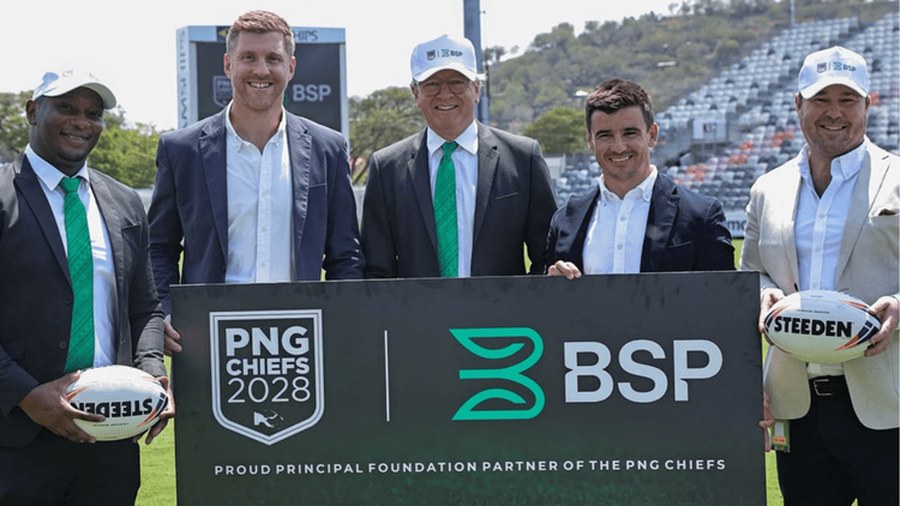
Photo source: TVWAN News
Last week I paid my taxes like every other law-abiding Papua New Guinean, watched a decent chunk of my salary disappear before I ever saw it, and then opened the paper to read that a rugby league player who hasn’t kicked a ball for PNG yet will pay none of his. Not some. None. For ten years.
Somewhere between those two facts is an essay, and possibly a small ulcer.
Let’s be clear about something first: I love that PNG has an NRL team coming. Rugby league isn’t a sport here, it’s closer to a state religion, and the PNG Chiefs taking the field in 2028 as the competition’s 19th club is a genuinely historic moment for a country that has spent decades watching other nations’ teams from the sidelines. I want the Chiefs to win. I want ten-year-olds in Lae and Hela and Milne Bay to grow up believing a Kina-sized dream is possible. None of what follows is me rooting against that.
But here’s the question I can’t shake, and I suspect a lot of ordinary Papua New Guineans can’t either: who, exactly, is going to be paying for all of this once the fireworks stop?
Because right now, the money involved is staggering. The Australian government has committed A$600 million over ten years to get PNG into the NRL — funding that flows through the Pacific Rugby League Partnership and sits, notably, outside Australia’s normal aid budget to PNG. On our own side of the border, the 2025-2029 national budget quietly tucked away K100 million a year — K400 million in total — for an “NRL Bid Support Programme,” plus another K50 million for grassroots games. Bank South Pacific then signed on as principal sponsor through 2030, a deal reported at around A$5 million a season and worth close to A$20 million all up — the biggest club sponsorship in NRL history, by the club’s own account. And over at the Airways Hotel, a private developer is building a K200 million “Chiefs Village”: 67 fully furnished apartments with access to a gym, pools, a barber, and, because apparently regular luxury wasn’t enough, a private island resort for the players and their families.
I am, genuinely, happy for them. I just want to know where I sign up for the barber and the island.
Here’s the part that actually stings, though, and it isn’t the accommodation. It’s the tax. Written into PNG’s own national budget is a line exempting Chiefs players and staff from salary and wages tax — reportedly for ten years from kickoff. Meanwhile, an ordinary Papua New Guinean earning a modest office salary starts losing 30 percent of anything over K20,000 a year, 35 percent over K33,000, and PNG’s top marginal rate sits at 42 percent — a rate that has barely moved in two decades. So a rugby star recruited partly because of the tax break will take home every single Kina of his contract, while the nurse treating his knee injury and the teacher educating his future teammates hand a third or more of theirs straight to the government funding his exemption. If that isn’t the definition of a two-tier country, I don’t know what is.
And PNG isn’t even the only government footing this bill quietly. Canberra is amending its own tax law to protect the exemption on the Australian end too, which tells you this wasn’t a small local sweetener — it was negotiated at the highest levels of two governments. It’s also not going unnoticed in the NRL itself. Panthers coach Ivan Cleary says the competition “can’t compete” with tax-free money after losing premiership winner Brian To’o to the Chiefs, and Wayne Bennett has openly accused the NRL of tilting the playing field. Even Australian politicians aren’t sold — Senator Pauline Hanson has called the whole arrangement a waste of Australian taxpayer money, on top of the roughly A$500 million a year Australia already spends supporting PNG. The Lowy Institute did the maths on that $600 million and found it could have built around 150 classroom blocks like the ones funded through the Kokoda initiative, or close to 95 rural health centres, right across all 22 provinces. That’s not a rhetorical flourish. That’s an actual, costed alternative use of the money, sitting right there for anyone to weigh against a rugby jersey.
Then there’s the small matter of us fighting New Zealand over a name we don’t even fully own yet. New Zealand Rugby has held the trademark on “Chiefs” since 1998 and is now threatening legal action, unhappy that the new PNG franchise shares its name and — awkwardly — its exact black, red and yellow colour scheme. As I write this, the dispute is unresolved and could end up in court before the Chiefs have even unveiled a jersey. We’ve spent hundreds of millions of Kina and dollars, and we may not get to keep the name.
So here’s my worry, and it isn’t about 2026 or 2027, when everyone is still riding the high of the announcement, the jerseys, the recruitment wins. It’s about 2029. It’s about what happens after the opening season excitement fades, the accommodation is old news, and the tax exemption clock starts running down. Will the Chiefs be self-sustaining by then, carried by sponsorship, ticket sales, and broadcast rights like every other club in the competition? Or will there be a permanent line item in the PNG national budget, year after year, funding a rugby league team while our hospitals run short of basic supplies and our roads stay unfinished? Nobody currently talks about this, because right now everything is hope and hype. I haven’t found evidence that PNG is borrowing specifically to fund the Chiefs — but I also haven’t found anyone in government willing to say clearly what happens to the funding once the honeymoon ends, and that silence is its own kind of answer.
And why rugby league, specifically, at this scale? PNG has soccer, boxers, weightlifters, and rising cricket talent who would treat a fraction of K400 million as a life-changing miracle. I’m not saying don’t back the Chiefs. I’m saying a nation that can find hundreds of millions of Kina for one code of one sport should be able to explain, in plain language, what the rest of us — the ones paying full tax, the ones who will never sign an NRL contract — actually get out of it.
Because that’s really what this comes down to. Not whether PNG deserves a seat at rugby league’s biggest table — we do, and it’s overdue. It’s whether “PNG” in PNG Chiefs is going to mean the players, the sponsors, and the government officials standing at the ribbon-cuttings, or whether it’s going to mean the ordinary mother in Port Moresby paying her full tax bill so someone else’s son can pay none of his.
So tell me: when the cameras are gone, the exemption has ten years on the clock, and the real bill finally comes due — who do you think is actually going to be holding it?