
Society
DWU Turns 30 — So Did the Drama
by Li Richards · August 23, 2026
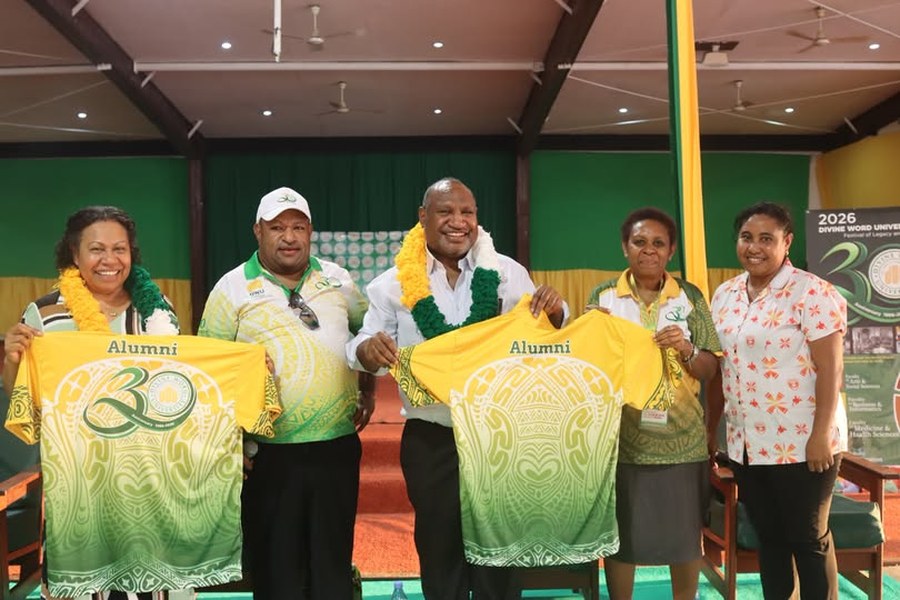
Photo source: Divine Word University official Facebook page
Happy birthday to Divine Word University, which this weekend turned 30 — and, like most 30-year-olds, celebrated by throwing a big party, inviting the Prime Minister, and then having a minor meltdown halfway through the weekend. Relatable.
Here’s the question worth sitting with as the garamut quiets: can an institution be both a genuine national success story and a warning sign, in the same three days? DWU just gave us a live demonstration of exactly that.
Thirty years ago, DWU wasn’t a university at all — it was upgraded from Divine Word Institute by an Act of Parliament in 1996. Three presidents have steered it since: founding president Prof Fr Jan Czuba, followed by Prof Cecilia Nembou, followed by the current president, Prof Fr Philip Gibbs. That’s a short list for three decades of leadership, which either says something good about stability or something about how hard the job is to hand off. Probably both.
The official three-day programme opened Thursday, 20 August, with launch ceremonies and speeches from Fr Philip, Fr Jan, and Fr Romeo — the SVD PNG Provincial (SVD stands for Societas Verbi Divini, the Society of the Divine Word, the Catholic missionary order that founded and still runs DWU). Then came the twist nobody printed on the programme: a surprise appearance by Prime Minister James Marape himself, who told the gathered crowd that no future government would be “stupid” enough to cut support to DWU. Big talk for a Thursday.
Day Two was Alumni and Foundation Day — the day the university hands its own history back to the people who lived it. Four female alumnae received Distinguished Alumnae of the Year awards, and their names went up on what DWU calls the “immortal wall,” a permanent plaque installation honouring standout graduates. It’s a nice piece of institutional memory-keeping: proof that a university’s real product, thirty years on, is the people it sends back out into the country. Marape had promised on Day One that he’d return on Day Two with his wife — DWU alumna Rachael Marape, by my account, though I’ll flag that one as unconfirmed in the public record rather than stated fact. He kept the promise, though “on time” wasn’t part of the deal; the couple arrived around 5pm, well into the afternoon. The alumni who’d travelled from across the country to be there apparently didn’t hold the lateness against him — plenty were happy just to shake hands with “Tambu man James.” For readers outside PNG: tambu is a Tok Pisin term for an in-law or someone connected to you through marriage or clan ties — the alumni were essentially claiming the Prime Minister as family for the day.
Now, the part of this story that didn’t make it into the official programme. On Thursday night, a group of students — frustrated over concerns that, by my own account as someone on the ground, hadn’t been adequately addressed — expressed that frustration through a small riot, with some damage done to university property. The disruption spilled into Friday morning, delaying the start of Alumni and Foundation Day itself. That’s a rough coincidence of timing: alumni who’d flown and driven in from around the country to celebrate arrived to a program running late because of unrest, with the Minister for Higher Education himself on the ground to witness it. Some alumni reportedly called for the SRC President and other student leaders involved to be removed — that call, and the specifics of who was involved, I’m presenting as reported sentiment on the ground rather than an established fact, since no official university statement has confirmed it.
There’s something almost too on-the-nose about it happening at a 30th anniversary. Thirty is the age where an institution — or a person — is supposed to have its identity sorted out. Instead, DWU got a live, public reminder that a chunk of its student body still feels unheard. That’s not necessarily an indictment. It might just be what growing up looks like: you throw the big party, and somewhere in the middle of it, someone reminds you the work isn’t finished.
The three days weren’t short on advice, either. Founding president Fr Jan Czuba challenged the university to bring alumni into its actual governance — onto the university council, into cabinet discussions, onto academic boards. Not just wheeled out for anniversaries and asked to write cheques. PM Marape challenged DWU to produce more entrepreneurs and teach more business courses — build people who create jobs, not just people who apply for them. And Minister Kinoka Feo, apparently in full faith-forward mode, told the university not to worry about money at all: dream big, start something, and trust that the funding follows. That’s three very different theories of what a university is for — a governance reform, an economic pivot, and a leap of faith — landing in the same weekend. Worth noting, too: this all unfolded against the backdrop of El Niño, the Pacific climate pattern that dries out weather across PNG in cycles, which has left Madang’s usually green surrounds turning steadily browner by the day. Even the grass seemed to be asking DWU to hurry up and figure itself out.
The weekend closed on Saturday, 22 August, with Cultural Day — students from every province in PNG showing up in the dress, dance, and language of home, turning the campus into a working model of the country it exists to serve. If Thursday’s unrest was the uncomfortable question, Cultural Day was closer to an answer: whatever the grievances, the diversity that DWU was built to hold together showed up and held together. That night, the university recognised its long-serving staff, including one Mr Casper Bas, reportedly the longest-serving staff member with over 58 years at the institution — a figure I couldn’t independently verify, but if true, means he served under the institution’s earlier life as a high school and institute, decades before the 1996 university charter.
Despite a few bruised walls and a delayed program, the three days went ahead — a reminder that DWU has weathered worse than one rough Thursday night in thirty years of existence. Happy 30th birthday, Divine Word University. May God bless you with thirty more, handsome years. But thirty is old enough to ask the harder question out loud: an institution that just heard three completely different visions for its future — alumni in governance, business courses, blind faith — and watched its own students riot mid-celebration, needs more than well-wishes to get to sixty. So which of those visions is DWU actually going to choose? And who gets a seat at the table when it decides?