
Society
Cut It or Keep It: Why Common Sense Needs a Lawyer Now
by Li Richards · August 25, 2026
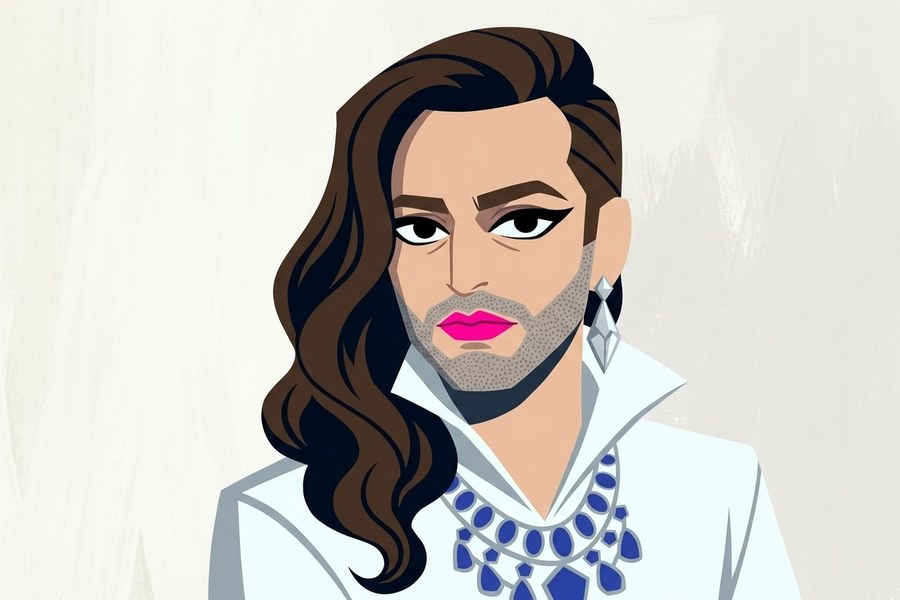
Image: AI-generated illustration created with Gemini
Ask a five-year-old what the difference between a boy and a girl is, and he’ll answer before you’ve even finished the question. No hesitation. No throat-clearing. No glancing around the room to check who’s listening. Ask a twenty-five-year-old the same question, though, and watch him stall. Not because he doesn’t know — he’s known since he was five too — but because somewhere between kindergarten and adulthood, he learned that the honest answer might cost him his job, his friends, or his seat at the dinner table. So he hedges, or he dodges, or he mumbles something about “it’s complicated.”
Since when did biology become a debate topic? A boy has a penis. A girl doesn’t. That’s not a hot take, it’s a diagram from a Grade 5 science textbook. And yet here we are, in a world where stating it plainly gets you labelled a bigot, while the more inventive claim — that a person can become the opposite sex by feeling strongly enough about it — gets treated as the more respectable position.
This isn’t a PNG import from nowhere. GLAAD, the American media-monitoring group that tracks LGBTQ visibility on television every year, counted 489 LGBT-identified characters across scripted TV in the 2024–2025 season, up four percent from the year before, and its separate report on kids’ and family programming lists gender-identity storylines now appearing in shows explicitly rated for younger audiences, not just late-night dramas. So no, this isn’t a conspiracy theory about what’s on Netflix — it’s a documented trend, and you’re free to decide for yourself whether it belongs in front of a seven-year-old.
Whether confusing children about their own biology actually helps them is a separate question, and here the evidence is thinner than the activists on either side would like you to believe. The UK’s Cass Review — a four-year, government-commissioned independent review of pediatric gender medicine published in 2024 — concluded that the evidence behind giving children puberty blockers and cross-sex hormones was of poor quality, and found no proof that these interventions reduce suicide risk, the claim most often used to justify rushing kids into treatment. That finding reshaped NHS policy in England. It’s also fiercely contested — researchers at Yale and elsewhere have published detailed rebuttals arguing the review’s own methods were flawed. I’m not a doctor and I won’t pretend this argument is settled; what I will say is that “the science is settled” is not a fair description of it either, and any adult telling you otherwise is selling something.
And it doesn’t stop with medicine. We’ve reached the point where “mother” no longer means the woman who carried you, but whoever felt like being called that today — dick optional. I’ll leave the mechanics of how that arrangement handles breastfeeding to your imagination, because I promised myself this essay would stay PG13, and some jokes just aren’t worth the visual.
Here’s the part I actually want to get to, though, because if I stop at mockery I’ve wasted your time and mine: this isn’t really about identity. It’s about coercion. If a grown adult wants to alter his body and call himself a woman, that’s his business, and frankly, his right. What is not his right is expecting — or legislating, or lawsuit-ing, or shaming — the rest of us into agreeing with him. My identity is my choice. It is not my right to impose that choice on you. That distinction, choice versus right, is the whole argument, and it’s the one thing this entire movement conveniently skips over.
Follow the money, and the picture gets more interesting, if less conspiratorial than I first made it sound. The global market for gender reassignment surgery alone was valued at roughly USD 2.9 billion in 2025, and industry forecasters expect it to nearly double within a decade. That’s surgery only — it doesn’t count the hormones, counselling, and follow-up appointments that typically run for life. Nobody needs to invent a shadowy pharma conspiracy here; the growth is real, it’s publicly reported, and it’s worth asking who benefits from a “solution” that never actually resolves.
Now bring this home to Papua New Guinea, because whatever ideological weather system forms in the West eventually blows this way — fashion, music, fast food, and yes, ideology. We got Netflix a few years after everyone else; don’t assume we’re exempt from this one either. But we’re not defenceless. Prime Minister James Marape has already said, on the record, that Parliament is unlikely to legislate LGBT rights “as far as both our Melanesian and Christian worldviews are concerned.” Whatever you make of that politically, it reflects where the country currently stands: PNG still criminalises male same-sex activity under a colonial-era law carrying up to fourteen years in prison, and there is no legal process here to change your recorded sex on official documents, full stop. Love it or hate it, that’s the legal reality — Western-style gender self-identification simply doesn’t exist in PNG law today.
That’s the window most Western countries have already slammed shut on themselves: our common sense is largely intact, our churches still carry weight, and our kids still learn that a boy is a boy before a screen tells them otherwise. That window won’t stay open by accident, though. It stays open because parents keep answering their five-year-olds honestly, teachers keep teaching biology instead of ideology, and the rest of us stop flinching every time someone accuses plain fact of being an opinion.
So here’s my question for you, reader, wherever you’re sitting with this: when your own five-year-old asks you the difference between a boy and a girl, are you going to answer like the five-year-old would — straight, no hedging — or are you already rehearsing the twenty-five-year-old’s stammer?