
Economy
Burkina Faso Built a Gold Refinery Mid-Coup. What’s Papua New Guinea’s Excuse?
by Li Richards · August 23, 2026
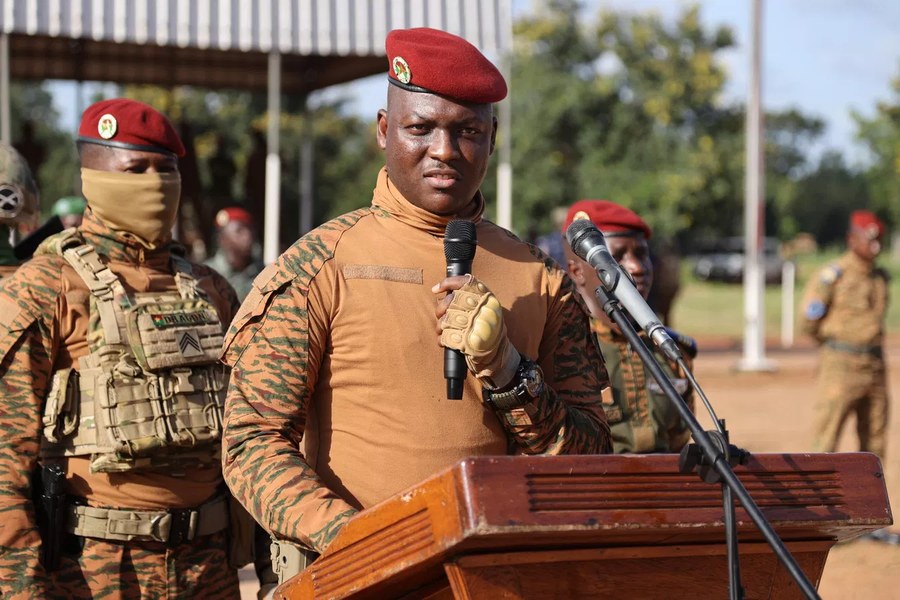
Photo source: Sputnik Africa
Ask a taxi driver in Port Moresby how the K100-billion-plus economy is treating him, and watch his face do something between a laugh and a wince. He’ll tell you the fare hasn’t changed, but the fuel to run it has. He’ll tell you rice at the corner store costs more than it did last dry season, and it wasn’t cheap then either. He’ll tell you he’s been saving for a block of land in Waigani for six years and the number keeps moving further away, like a mountain that walks when you’re not looking. Then he’ll ask you, quite reasonably: if we’re this rich, why does it feel like we’re broke?
That’s the question. Sit with it for a second, because the rest of this essay is really just trying to answer it — and the answer runs through a country you wouldn’t expect: Burkina Faso.
Wait — Burkina Faso? The landlocked West African nation currently making headlines for defying France, surviving coup attempts on what feels like a monthly subscription, and being run by a 38-year-old army captain? Yes, that one. Stay with me.
Let’s deal with the numbers first, because numbers are the one thing politicians and fact-checkers can actually agree to argue about. Prime Minister James Marape has been telling the country that PNG’s economy is booming — and to be fair to him, he’s not making it up. Government figures put PNG’s GDP (Gross Domestic Product, basically the total value of everything the country produces and sells in a year) at over K122 billion in 2024, growing at somewhere between 4.6% and 5.5% a year through 2025 and 2026. Westpac, an independent bank with no reason to flatter him, backs the growth story up. So on paper, Marape’s “richest black Christian nation” line isn’t fantasy. The economy is genuinely getting bigger.
But here’s the catch, and it’s the same catch that trips up growth stories all over the developing world: an economy getting bigger and a family’s dinner table getting fuller are two completely different things. Fuel prices jumped again in May 2026 — petrol up to around 610 toea a litre, diesel to 769 — and the government had to throw a K1 billion relief package at the problem just to keep things from boiling over. Food prices have been climbing on the back of El Niño droughts and import dependence for years. PNG still buys well over a billion kina worth of rice, wheat, and processed food from overseas every year, despite sitting on some of the most fertile soil in the Pacific. So yes — K122 billion economy. Also yes — a taxi driver who can’t afford a house. Both true at once. That’s not a contradiction, that’s a distribution problem, and distribution problems are exactly where this story gets interesting.
Enter Ibrahim Traoré. Burkina Faso’s transitional president took power in a 2022 coup, inherited a country bleeding from a Sahel insurgency, and instead of just holding on, he went on economic offense. He banned the export of unrefined gold and built the country’s first state-owned gold refinery, so the value of the gold — not just the royalty on it — stays home. He rewrote the mining code to force companies to hand the state a guaranteed 15% stake in projects, free, before profits even get split. He put tractors and seed packages directly into farmers’ hands and built factories to process the harvest locally instead of shipping raw crops out and buying them back as tinned goods at triple the price.
It’s worth being honest about the cost of all this: Traoré’s government has also suspended political parties, restricted foreign press, and survived what officials say is somewhere north of a dozen coup and assassination plots — including one in January 2026 allegedly bankrolled from across the border, foiled after an air force captain confessed to taking around $15,000 to help pull it off. Thousands of ordinary Burkinabè reportedly turned out overnight to physically shield him from the plotters. That’s not a stable, boring democracy. That’s a country running on adrenaline and loyalty, and it’s fair to ask how long that’s sustainable.
But strip away the military drama and look only at the economic playbook, and there’s something PNG doesn’t need a coup to copy: the idea that raw resources leaving the country unprocessed is a choice, not a law of nature. PNG has been mining gold and copper at Porgera, Ok Tedi, and Lihir for decades and still exports it raw — meaning someone else’s refinery, in someone else’s country, gets the jobs and the profit margin that comes from finishing the job. Burkina Faso, mid-insurgency, managed to build a refinery anyway. If they can do it while dodging coup plotters, what’s PNG’s excuse?
This is where it stops being a foreign policy lecture and starts being personal again. PNG doesn’t need to copy Traoré’s methods — suppressing the press and ruling by decree isn’t a price worth paying, and PNG’s democracy, messy as it is, is worth more than that trade. But PNG can absolutely copy his instinct: stop treating resource wealth as something that passes through the country on its way to somewhere else, and start treating it as something that has to stop here first — refined here, processed here, taxed here, spent here, on the roads and clinics and school fees of the districts that actually sit on top of the gold. Because right now, the taxi driver doesn’t experience a K122 billion economy. He experiences fuel that costs more each month and a housing market that laughs at his savings account. And no press release about GDP growth is going to change how his week feels until the wealth actually reaches his pocket, not just the country’s ledger.
So here’s the question worth sitting with, the same one that taxi driver would ask if you gave him the mic: if a country fighting off an insurgency and coup plots every few months can find the will to build a gold refinery and feed its own people — what, exactly, is stopping a peaceful, democratic Papua New Guinea from doing the same?